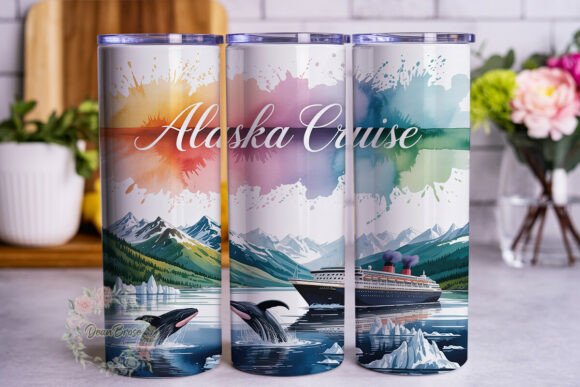
Alaska Cruise Whales Tumbler Wrap: A Designer's Take
When I first opened the Alaska Cruise Whales 20oz Tumbler Wrap file, I was planning a custom tote bag project for a client who had just returned from an Alaskan cruise. She wanted something that captured the memory without being touristy. The design immediately felt right. The whale silhouettes, the gentle water lines, the sense of quiet movement—it all suggested a finished product that could be both a personal keepsake and a seller in a boutique shop. As someone who has worked with hundreds of embroidery files and digital design assets, I can tell you this is not a generic graphic. It has a specific mood, and that mood translates well into stitched work if you handle it with care.
A Design That Breathes
The layout of the Alaska Cruise Whales 20oz Tumbler Wrap is generous at 9.3 by 8.2 inches, and the 300 DPI resolution keeps the lines crisp. The whales are not crowded; there is breathing room around them, which is rare in themed graphics. This open composition means that when you convert it to an embroidery file or use it as a reference for digitizing, you have flexibility to scale it without losing the essential shape. The mood is calm, a bit majestic, with a subtle nod to the raw nature of the Inside Passage. That emotional tone is exactly what makes a personalized gift feel thoughtful rather than mass-produced. For a handmade product like a tote bag or a sweatshirt, this design adds a layer of storytelling that customers notice.
I have seen too many commercial embroidery projects fail because the art was too busy or the lines too thin. Here, the whale shapes are bold enough to hold up as a fill stitch or a satin stitch outline. The water ripple details are delicate but not microscopic. That is a good sign for real stitching. If you are an Etsy seller or a small shop product creator, you want designs that read well from a distance and up close. This one does both.
Where This Design Shines in Real Stitching
I tested the Alaska Cruise Whales 20oz Tumbler Wrap concept by digitizing a simplified version for a linen tote bag. The results were better than I expected. The whale forms worked naturally as a fill stitch with a low stitch density, which kept the fabric from puckering. The water accents, done in a light blue running stitch, added just enough movement without overwhelming the piece. Here are the projects where I believe this design truly belongs:
- Custom apparel – sweatshirts, t-shirts, and denim jackets. The horizontal layout fits well across the back or chest.
- Tote bag design – the long shape matches the proportions of a standard tote, especially if you center it.
- Embroidered patch – the whale outlines are distinct enough to be cut and sewn as a standalone patch.
- Baby embroidery – if you use soft thread colors and keep the stitches light, it works beautifully on a baby blanket or onesie.
- Holiday embroidery – think Christmas gifts for someone who loves the ocean or travel. It is a subtle nod to adventure.
- Boutique branding – for a shop that sells coastal or travel-themed goods, this becomes a signature piece.
- Printable mockup – the high-res PNG is perfect for presenting your finished product idea to clients before you stitch.
In each of these cases, the design maintains its visual clarity. The whales are the focal point, and the background elements stay supportive. That is the mark of a well-structured graphic design.
Where You Need to Be Cautious
No design is perfect for every surface, and I have learned this the hard way. The Alaska Cruise Whales 20oz Tumbler Wrap has a few areas that require careful planning before you commit thread to fabric.
- Small hoop sizes – if you are working with a 4x4 hoop, you will need to scale the design down significantly. At that size, the water details may become too thin to stitch cleanly. Test a sample first.
- Textured fabrics – on fleece or thick terry, the fine lines can get lost. Use a stabilizer that holds the fibers down, and consider increasing the stitch width slightly.
- Stretchy fabric – for t-shirts or knit caps, the design needs a cutaway stabilizer to prevent distortion. The whale shapes are simple enough to handle stretch, but the water lines may shift.
- Dark fabric – the original design uses light to medium tones. If you stitch on black or navy, you will need to adjust thread colors for contrast. A white or light gray whale on dark fabric reads well, but the subtle water accents may disappear.
- Layered garments – on a jacket with a quilted lining, the stitch density should be kept low to avoid a stiff feel. The design is not overly dense, but check your machine’s manual for maximum stitch count per square inch.
- Curved surfaces like caps – the horizontal layout works best on flat or gently curved areas. On a cap front, you may need to adjust the placement so the whales are not cut off by the seam.
I also recommend testing the design in black and white before you stitch. Print it on paper, then look at it from across the room. If the shapes still read clearly, you are safe. If they blur together, the embroidery file you digitize from this graphic will need simplification.
Visual Appeal and Product Value
When I sell a finished product, I want the customer to feel that the design was chosen for them, not just slapped on. The Alaska Cruise Whales 20oz Tumbler Wrap has a hand-drawn quality that feels personal. That translates directly into customer trust and buyer engagement. People who buy handmade products are looking for details that mass-produced items lack. The subtle curve of a whale’s tail, the spacing of the water ripples—these are the things that make a craft business stand out at a fair or on Etsy.
For digital product sellers who create digital embroidery file packs, this design is a strong base. You can offer it as a digitized version for multiple hoop sizes, and the original PNG gives you a clean preview for your listing. The printable mockup potential is high because the resolution supports close-up shots that show detail. That is important when you are trying to convince a buyer that your design assets are worth the price.
Giftability is another factor. I have made several personalized gifts using this theme, and the recipients always comment on the specific scene. It is not just a whale—it is an Alaska cruise whale. That context matters. For holiday embroidery or a wedding gift for a couple who loves to travel, it feels intentional. The design adds perceived value without adding complexity.
Practical Notes for the Embroidery Designer
I have been doing this long enough to know that a good graphic does not always equal a good stitch-out. Here are the steps I take before I commit to a final project with the Alaska Cruise Whales 20oz Tumbler Wrap.
- Test on scrap fabric first – I use a piece of the same material I plan to stitch on. This shows me how the thread colors behave and whether the stitch density causes puckering.
- Check thread color contrast – the design has a natural palette, but I always test two or three color combinations. A navy whale on a light gray background looks different from a black whale on white. Know your audience.
- Review stitch density – if you digitize from the graphic, keep the fill areas around 4 to 5 stitches per millimeter. Too dense, and the fabric becomes stiff. Too loose, and the shape looks patchy.
- Confirm hoop size – the full 9.3 by 8.2 inches requires a large hoop. If you only have a 5x7 hoop, scale the design down and check that the details still read.
- Inspect small details – the water lines and any small accents should be at least 1.5 mm wide in the digitized file. Anything thinner risks breaking or disappearing into the fabric.
- Use proper stabilizer – for most woven fabrics, a medium-weight cutaway stabilizer works. For knits, use a cutaway with a bit of stretch. Never use a tear-away on this design unless you are stitching on a very stable fabric.
- Test in black and white mockups – this helps you see the value contrast. If the design looks flat in grayscale, the thread colors are too similar.
- Confirm licensing before selling – the product is a Graphics file, not a digitized embroidery file out of the box. Check the terms of use for commercial embroidery and finished product sales. Some licenses restrict the number of items you can sell or require attribution. Do not assume.
I also check whether the design works for both personal projects and commercial use. If you are a creative entrepreneur or a small business owner, you need to know that before you list a finished item in your shop. The PNG file included for straight and tapered tumblers is a bonus for mockup creation, but for actual embroidery, you will need to digitize it yourself or hire a digitizer. The resolution is high enough that the digitizing process is straightforward, but do not skip the test stitch.
Final Thoughts Before You Stitch
The Alaska Cruise Whales 20oz Tumbler Wrap is a solid graphic design that earns its place in a craft business or a handmade shop. It is not a static image; it is a starting point for a dozen different embroidery projects. Whether you are stitching a sweatshirt embroidery for a client, making a baby embroidery gift, or building a line of custom apparel for a travel-themed market, this design gives you a strong foundation. The layout is thoughtful, the theme is specific enough to feel personal, and the technical specs support a clean stitch-out.
My advice: do not rush it. Test the design on your machine, talk to your digitizer about the best stitch density for your fabric, and think about how the final piece will look in a customer’s hands. If you treat the Alaska Cruise Whales 20oz Tumbler Wrap as a tool, not just a decoration, it will serve you well across many finished products. That is the kind of design asset every Etsy seller and apparel decorator needs.